
Workers’ Housing Release Meaning
The Washington County Sheriff’s Office operates Workers’ Housing as a low-security facility associated with Purgatory Correctional Facility. Work release allows approved activity outside a secure setting under program terms. It is not the same as discharge. A person can leave the building for work or another authorized purpose and remain legally in custody, subject to a return requirement and the controlling sentence or court order.
Final release means that the relevant custody authority ended. For a county inmate, that event should appear in the Sheriff’s Purgatory release record or maintained release documentation. For a UDC contract inmate, physical departure from Workers’ Housing may be a move to another placement. The Utah Board of Pardons and Parole or UDC record, not the sight of a person outside the building, controls whether state prison custody ended.
| Event | Custody result | Proof to use |
|---|---|---|
| Authorized work activity | Custody usually continues | Program or facility record |
| County final release | Sheriff custody ends | PCF release timestamp and maintained record |
| UDC placement move | State custody continues | UDC location and placement record |
| State parole | Prison custody ends; supervision may begin | Board order, UDC detail, and AP&P |
| Transfer to another agency | One custodian ends; another begins | Receiving system and Sheriff record |
Confirm Workers’ Housing Release
No separate public Workers’ Housing release feed was documented. Use the same official Sheriff and UDC split that applies on the Purgatory campus. The Sheriff’s fourteen-day release report is the direct online proof that PCF custody ended during its rolling window. It is arranged by date and time and displays a generation timestamp.
Follow these checks in order.
- Ask whether the movement was authorized program activity or a final release event.
- Search the Sheriff report by surname and match the exact release date and time.
- Check the current roster separately. Absence alone cannot explain a transfer or data lag.
- Use the five-day booking report for the PCF number, arresting agency, charge, statute, and court.
- Determine whether the person was a county inmate or a UDC placement.
- Request the maintained Sheriff record when the reason, authority, destination, or older event is needed.
The official release-report capture shows the shared Purgatory route:
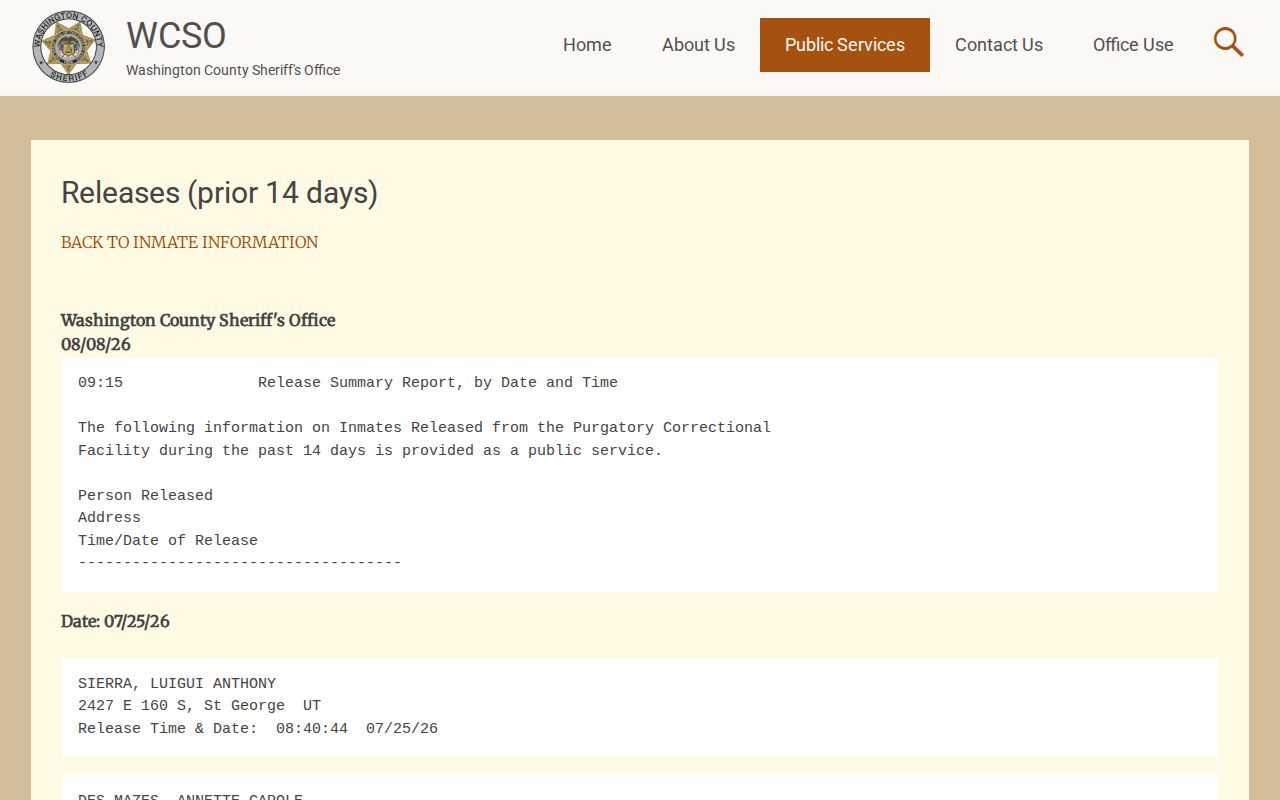
The timestamp confirms when Sheriff custody ended. It does not describe program attendance, prove a community destination, or state why release occurred.
Workers’ Housing Record Fields
The web report shows the person released, an address or destination-style entry, and the time and date of release. It does not show a booking number, release reason, charge, bond type, authorizing court, photo, or a formal county-versus-state custody label. A category in the address-style field may provide a clue, but it should not be presented as a guaranteed destination.
A focused records request can ask for the admission and release dates, PCF number, legal custodian, release type or code, releasing authority, and receiving agency if those fields are maintained and public. For Workers’ Housing, it is also useful to ask whether the recorded movement was an authorized absence, facility reassignment, county discharge, or state-placement transfer. Do not ask the agency to invent a new analysis.
Workers’ Housing Records Contact
The research did not identify a separate public street address, direct phone, or records office for the building. Route case-specific questions through Purgatory Correctional Facility and the Washington County Sheriff. Do not invent distinct lobby hours or a separate release desk.
Purgatory Correctional Facility750 South 5300 West
Hurricane, UT 84737
(435) 656-6600
Listed office hours: Monday-Friday, 8:00 a.m.-5:00 p.m.
comment@washeriff.net
Use the Washington County Sheriff GRAMA form for a maintained release record. Include the full name and aliases, date of birth or PCF number, approximate admission date, and likely release date. Choose copy or inspection, state the record sought, and ask for segregable public portions if a field is withheld.
The Sheriff states a response within ten working days. Most report-copy requests have a five-dollar minimum, while inspection of a public record is free. The requester should not prepay. The official form can be reviewed before submission:
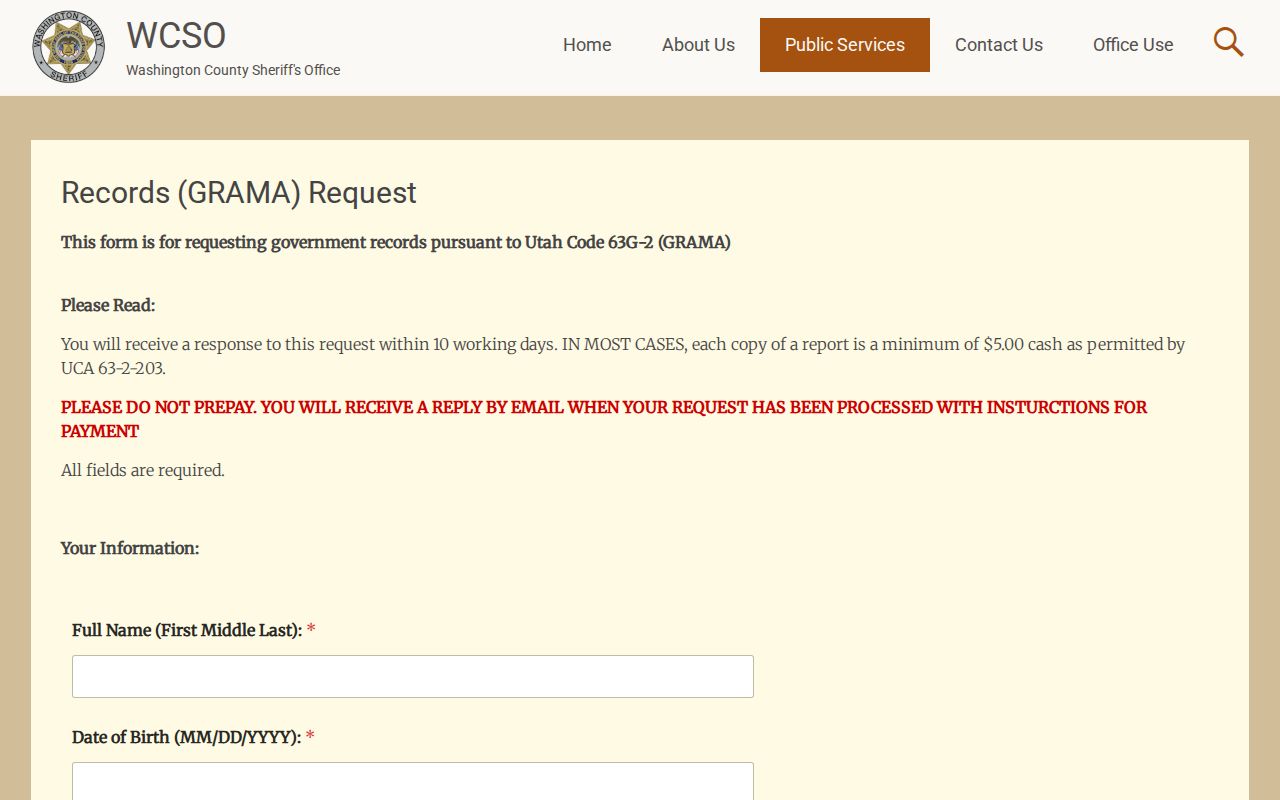
The form supplies the county route when the web window has expired or the public report lacks the legal custodian and release reason.
Workers’ Housing Building History
Washington County’s March 2018 announcement described a dedicated single-level, low-security building. It was planned at 14,000 square feet and intended to replace temporary work-release structures that had been used for sixteen years. The design called for approximately 128 low-risk inmates, with construction then projected during 2018.
Those are historical planning facts. They should not be converted into a live capacity, current resident count, or guarantee that every planned feature still operates in the same form. Facility staff must confirm current program status. The source remains valuable because it proves that Washington County described Workers’ Housing separately and explains why it merits its own facility record page.
The county announcement capture preserves that local context:
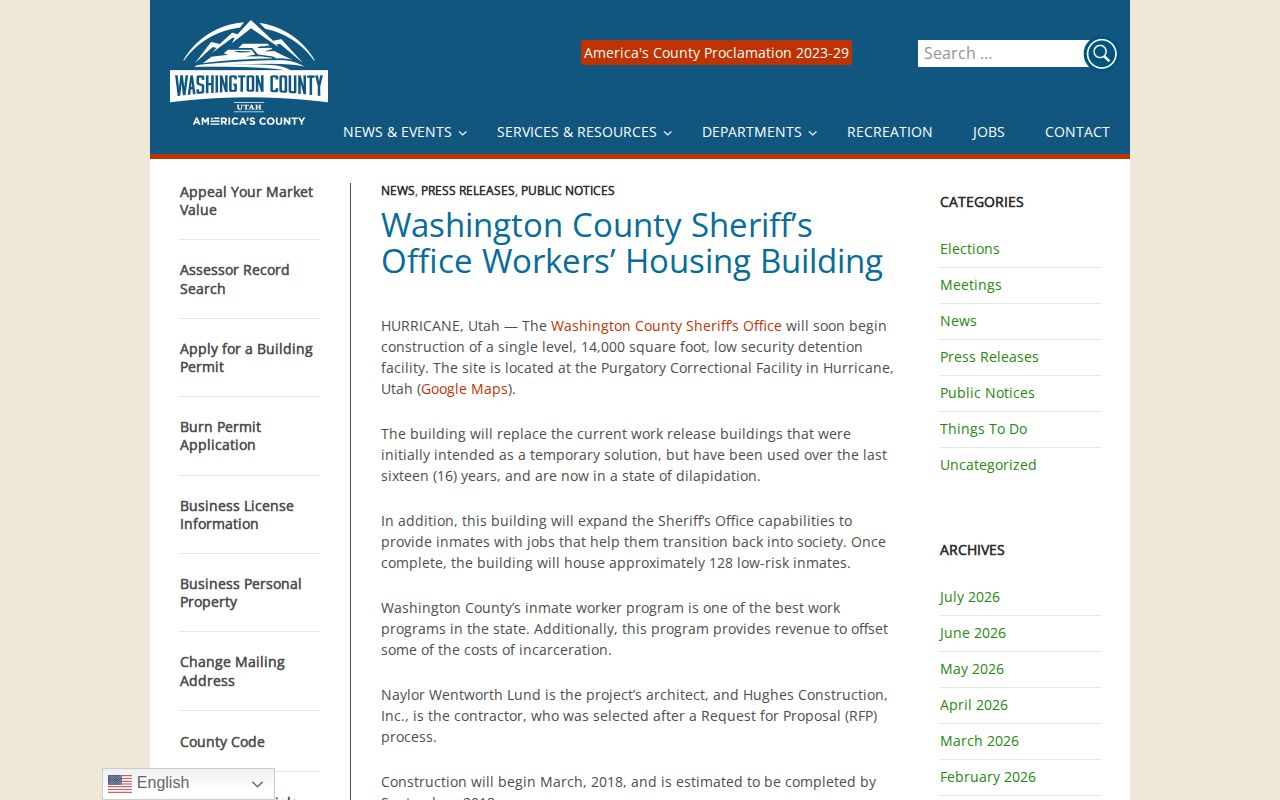
The separate building does not create a separate custody authority. The Sheriff still operates the facility on the Purgatory site.
The announcement also should not be used to infer a named resident’s risk level, work assignment, schedule, or current eligibility. Those facts are person-specific and may not be public. Historical design language describes the building, not every person housed there. For release verification, the useful fact is structural: Workers’ Housing was created as a low-security work-release setting tied to the Sheriff’s Purgatory operation. That connection explains why the PCF report and Sheriff records process remain the official county routes.
Workers’ Housing UDC Placements
The dedicated workers’ building and Washington County’s state-contract role are separate local facts. The first explains the low-security facility type. The second shows why some people physically held on the Purgatory campus remain under UDC release authority. Neither fact should be used as a shortcut for a named person’s status.
Washington County also participates in the UDC Inmate Placement Program. An April 2025 state booklet listed Washington County with 506 total jail beds, 200 contracted beds, and 100 then available for Corrections. The figures describe that program at a particular date, not a current headcount or a statement that all Workers’ Housing residents are state inmates.
The combination of a low-security worker facility and state-contract beds makes legal custodian the first question. A county resident’s final release may be controlled by the Sheriff and local court. A UDC resident’s parole or state discharge is controlled through the Board and UDC. Ask which status applied before selecting a search.
The state program capture shows why a UDC follow-up may be needed:
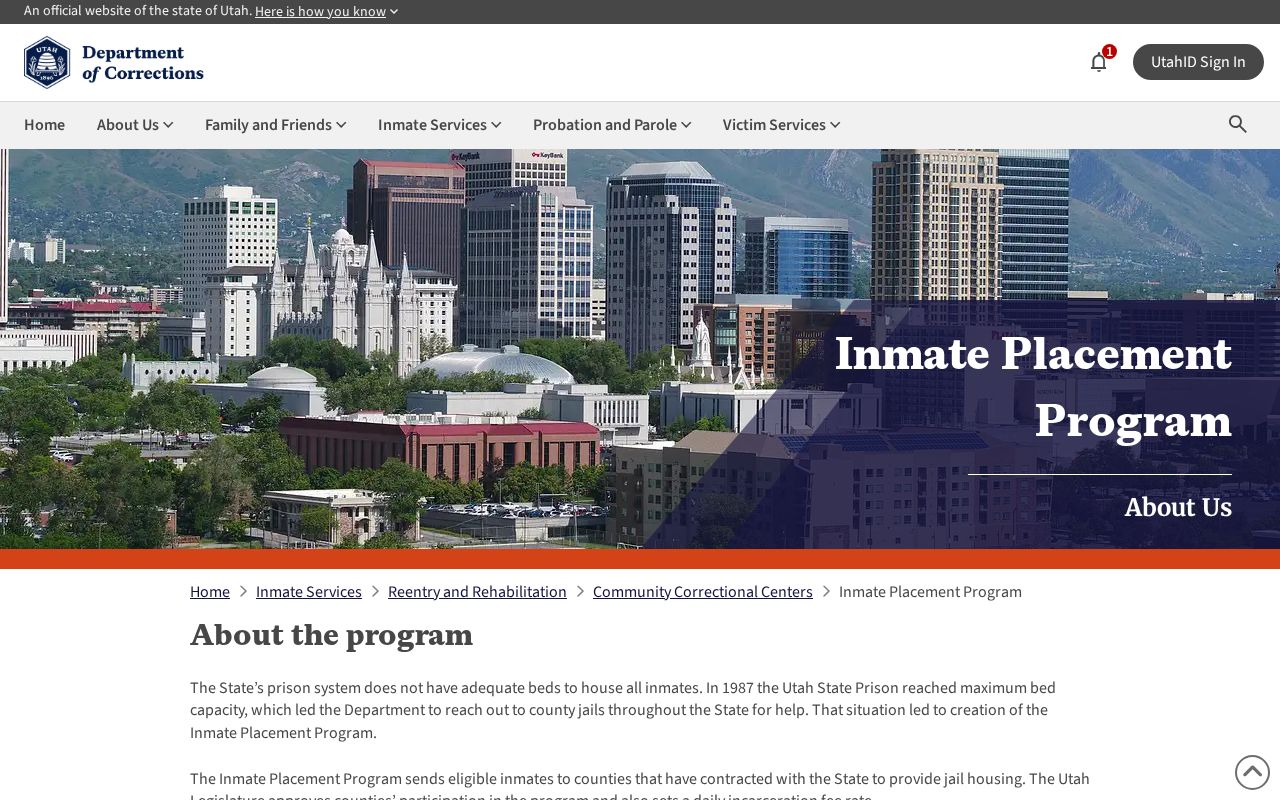
Search UDC by offender number when known, or by full first and last name. Read the housing location and exact “Release Date and Type” field, which may be unavailable on a particular result. A Board order can set a prospective release, but a later action or transfer can change the outcome.
Workers’ Housing Versus Purgatory
Purgatory is Washington County’s adult county jail and the source named by the Sheriff’s current, booking, and release reports. Workers’ Housing is a low-security work-release component on the same site. It serves a different operational purpose, but final-release verification still flows through the PCF report and Sheriff records unless the agency identifies a distinct maintained record.
The Purgatory release page covers interagency handoffs, ICE clues, county booking fields, and the full facility contact route. For Workers’ Housing, the added question is whether the observed departure was part of authorized activity. That question should be answered before any claim of final release.
Note: Current capacity, program rules, exit procedures, and routine release times were not established by an official current source and should be confirmed with PCF.