
Washington County Parole Versus Probation
Parole and probation both allow supervision in the community, but they start in different places. The Utah Board of Pardons and Parole may grant parole to an eligible state prisoner before the sentence terminates. Utah Department of Corrections Adult Probation and Parole, commonly called AP&P, then handles field supervision. Probation is imposed by a court. It may be part of a Washington County case after some jail time, or it may replace a prison commitment. Probation therefore does not prove a person was released from a Utah prison.
A Purgatory Correctional Facility timestamp proves that Sheriff custody ended at that time. It does not establish parole, probation, or full discharge. A state inmate housed at Purgatory through UDC may leave the county facility while remaining in state custody. The agency that issued the order and the next listed location matter more than the building exit alone.
| Point | Parole | Probation |
|---|---|---|
| Who orders it | Utah Board of Pardons and Parole | The sentencing court |
| What comes first | A state prison sentence | A court sentence, sometimes with county jail time |
| Who may supervise locally | UDC AP&P | UDC AP&P when the case is assigned there |
| Best public proof | Board order plus current UDC status | Court sentence plus current UDC status when AP&P supervises |
| How it ends | Discharge or sentence termination by lawful authority | Court completion or discharge shown in the case record |
- Parole
- Conditional community release from state imprisonment before the sentence fully terminates.
- Probation
- Court-ordered community supervision imposed as part of a criminal sentence.
- Discharge
- The formal end of a sentence or supervision term, not merely release from a building.
- Absconder
- A supervised person alleged to have stopped reporting or otherwise left supervision without authorization.
Verify Washington County Post-Release Supervision
The most reliable Washington County supervision check uses several records in sequence. No single missing result proves that supervision ended. UDC limits its public offender search to people currently under its supervision, so an old case or a fully discharged person may require a formal record request. Name matches also need care. A UDC number is a stronger identity key than a name by itself.
- Open the UDC offender search. Search by UDC number when known, or enter the required first and last name with an optional middle name.
- Compare the name and date of birth. Open the matching detail and preserve its exact location, assigned facility, case manager, and “Release Date and Type” value.
- For parole, search the Board’s scheduled hearings and recent decisions. Read the person history and download the order tied to the decision.
- For probation, inspect the sentencing record through Utah Xchange or the clerk for the court named in the Washington County case. The judgment states whether probation was ordered.
- Contact AP&P Region 5 for the correct local channel when the public record does not settle current supervision. Disclosure limits may restrict case-specific details.
- If the person has vanished from the current UDC search, request the public discharge or termination record from UDC. Do not assign a date based only on disappearance.
The official UDC search interface shows how Washington County parole and probation records are keyed. The Utah offender-search source provides the public name and UDC-number route.
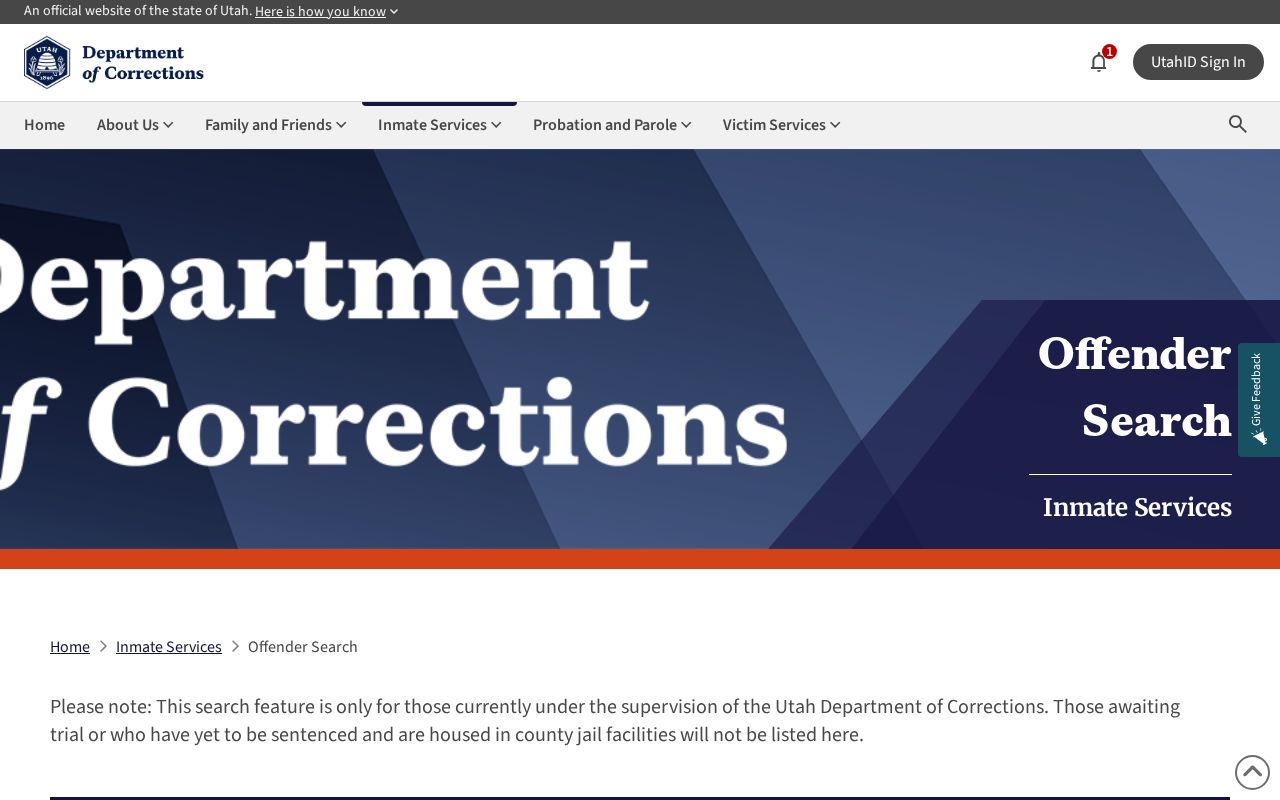
Use the result as a current state-supervision record. It is not a permanent list of every person ever discharged in Washington County.
Important: A parole or community location can show release from prison while UDC supervision continues. A prison or contract-jail location means incarceration continues.
Washington County Region Five Office
Washington and Kane counties share the Region 5 Hurricane AP&P office. That local arrangement is distinctive because the office sits near the Purgatory campus, yet it serves a different legal role. The Sheriff’s Corrections Division runs Purgatory. AP&P supervises assigned people in the community. The Board decides parole for state prison sentences. Similar addresses and agency names must not blur those separate duties.
620 South 5300 West, Suite 247
Hurricane, UT 84737
Phone: 435-634-2800
Service area: Washington and Kane counties
The official probation and parole office directory is the source for the Region 5 listing. Its captured office information shows the Washington County post-release supervision route.
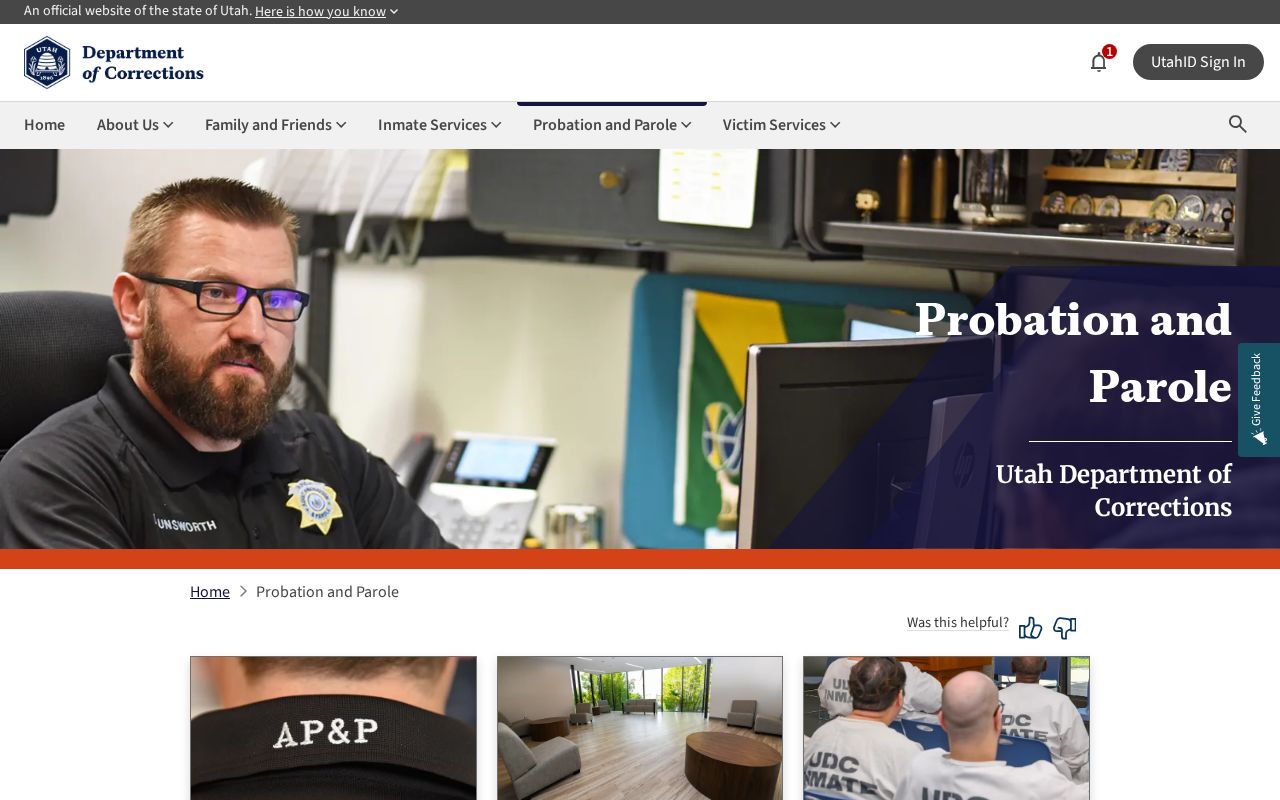
This office can route a valid question about local AP&P supervision. Purgatory staff handle county custody records, not the terms of state community supervision.
UDC also lists a statewide Adult Probation and Parole number, 801-545-5908. Region 5 is the more focused Washington County contact. An assigned case manager may appear in a UDC detail record, but public disclosure can be limited. Ask for the correct official record or contact path rather than pressing for information the agency cannot release.
Note: Office contact details can change, so confirm the Region 5 listing on the UDC directory before an in-person visit.
Washington County Parole Hearing Records
A Board hearing is a step in the parole process, not proof of release. Utah uses one interactive Board page for “Find a Scheduled Hearing” and “Search a Recent Decision.” It can be queried by date, name, or UDC number. The service is continuously searchable, but the Board does not promise a fixed weekly publication cycle. Multiple offenses may also create several rows for the same event.
Scheduled results can include date and time, UDC number, court case, offense, maximum term, judge, county, guideline months, final expiration date, hearing type, location, and severity. Decision results add created and final dates, an effective description, and a downloadable order. The order controls. Labels such as “acknowledge earned-time program” or “no change” should not be recast as a simple grant or denial.
The Board hearing and decision search displays both functions used to trace a Washington County parole case.
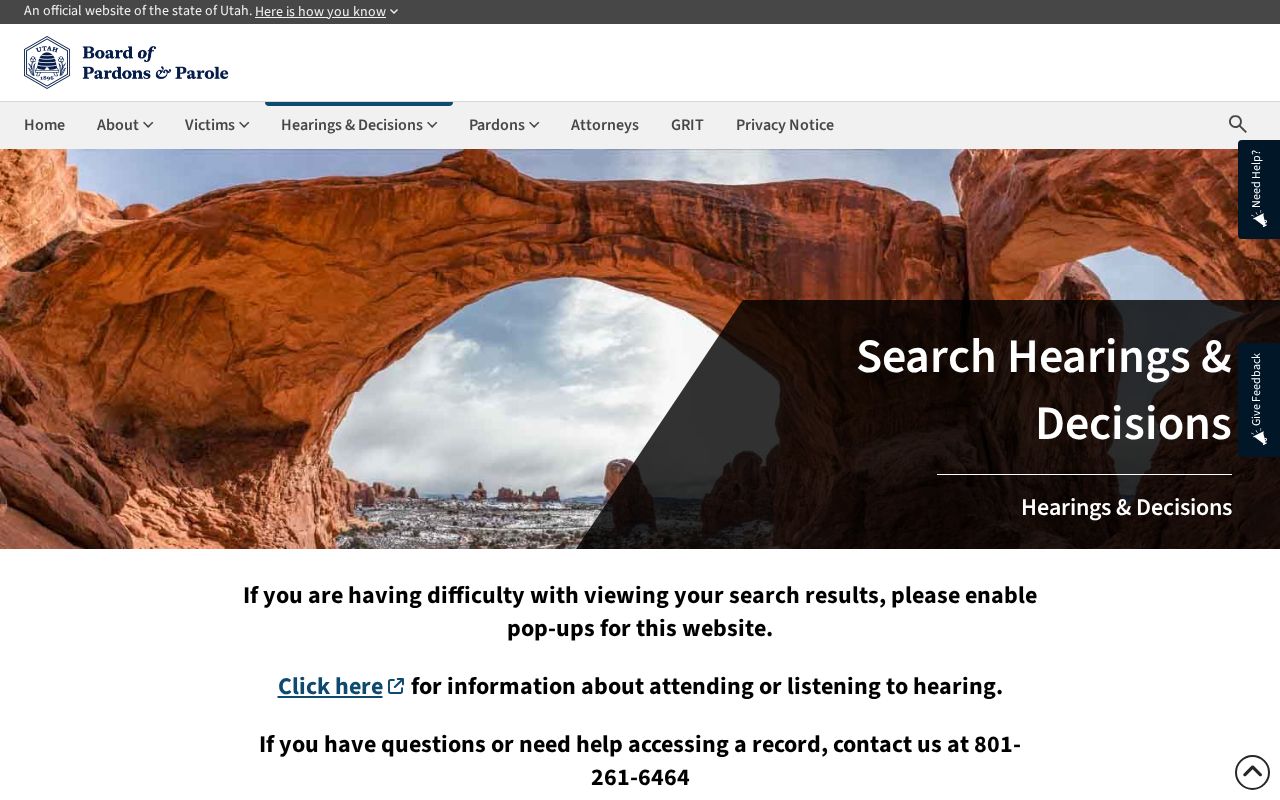
After reading the order, compare it with the current UDC location and release field. A prospective date may still be subject to conditions or later rescission.
Utah Code 77-27-9 governs parole proceedings and limits release before an applicable minimum term. An original hearing may set a release date or another hearing. A violation hearing can follow return to prison. Rescission may remove a date already granted because of conduct, a new case, or another supported ground. Exact Board language is essential.
Washington County Supervision Conditions
UDC’s supervision guidelines describe possible reporting, residence checks, assessments, treatment, travel or curfew limits, restitution, fines, community service, and case planning. Those are general categories. Only the signed conditions, court order, or Board order shows what applies to one person. Never infer a condition merely because it appears in the statewide guidance.
A violation does not automatically mean supervision ended. AP&P may respond under the governing order and state process. When a person is alleged to have absconded, UDC says AP&P can seek an arrest warrant and work with fugitive personnel and other agencies. An absconder has not completed the sentence. A violation warrant may lead to a Board hearing after a parolee returns to prison.
No official statewide public name-searchable absconder list was found. A missing UDC result cannot safely be turned into an absconder claim. Check Region 5, the court record, and a public UDC record response. VINE may send custody event notices, but it is not a public warrant database.
Important: Report only an official warrant, violation, or absconder status. Silence in a public search is not evidence of a violation.
Washington County Supervision Notifications
Utah VINE provides free custody information and event notices for participating prisons and jails. It can help follow a transfer, release, escape, return, death, or certain state-prison moves. UDC also documents a parole-release-date alert before release. VINE is useful for a specific person, but the reporting agency controls the source data.
Register online through VINELink or call Utah VINE at 1-877-884-8463. Phone registration uses a PIN to confirm the call. Email sends one notice. A VINE event should be checked against the Board order, UDC detail, AP&P record, or originating jail because release from one participant can be a transfer to another custodian.
The official UDC notification instructions explain the PIN, callback process, registration channels, and events. They apply to state corrections events and do not turn VINE into a full Washington County supervision history.
Note: A VINE notice corroborates a reported transition, while the issuing agency’s record establishes the legal action and its effective date.
Washington County Supervision Discharge
Release from custody and discharge from supervision are separate events. A parolee may live in Washington County while the state sentence continues. A probationer may finish a jail term but remain subject to the court’s probation order. The final record must identify sentence termination, discharge, or court completion rather than merely a change in physical location.
For parole, read the Board’s final order and request the public UDC discharge or sentence-termination record when the current search no longer supplies enough detail. Include the UDC number and ask for the final date and type, the authorizing order, and the public portion of placement or supervision history. UDC routes such requests through the records portal linked from its contact page.
For probation, use the sentencing court and later docket entries. Washington County is in Utah’s Fifth District, while justice courts handle lower-level matters within their jurisdiction. The court named on the booking or charging record is the right starting point. A clerk-certified disposition offers stronger proof than an unsupported claim based on a roster change.
When county custody is part of the history, compare the Purgatory fourteen-day release report, the current Sheriff roster, and the Washington County GRAMA form. The first provides a recent timestamp, the second answers current PCF custody, and the third can reach maintained fields that the short public report omits.
The broader Washington County release-record search explains how to pair a Purgatory timestamp with court and destination-system records. That pairing matters when county custody ends before state supervision or another agency’s custody does.